If detaching oneself from situations (vairagya), for example in order to restrain the senses and further progress on The Path, it can lead to the common misinterpretation that one is either ignorant/arrogant or just appearing to saddle their own spiritual high horse (with their over inflated spiritual “ego” alongside for the ride). People can misinterpret ones sense of redirection as appearing to ‘know it all’ or think that one is trying to place oneself above others, looking down on them rather than trying to help them on their own difficult journey.

On the other hand, we could all strive to offer more compassion/empathy/love and understanding, rather than our more common negative and judgemental ‘spiritual opinions’ (with the spiritual “ego” alongside and in full effect). Whilst detaching (vairagya) from certain situations or social circles we appear aloof, therefore us yogis should endeavour to integrate with others in tandem with reclusive work for inner development. This is where the real power of karma yoga – selfless service/voluntary work (seva) – can come into full effect.

Whilst using vairagya at work (detachment to expected outcomes and dispassion towards goals that are achieved) one can transcend the body, mind and ego by offering all to the Divine. The Divine may be your parents/family, it may be your own perception of spirituality, it may be a Higher Power (God) or one of your own chosen deities – whatever resonates with you. With the correct attitude at work then one can learn to consecrate one’s actions towards the Divine.
As is said in the ancient Sanskrit texts Bhagavad Gita: Chapter 4, Verse 18:
कर्मण्यकर्म य: पश्येदकर्मणि च कर्म य: | स बुद्धिमान्मनुष्येषु स युक्त: कृत्स्नकर्मकृत् || 18||
karmaṇyakarma yaḥ paśhyed akarmaṇi cha karma yaḥ sa buddhimān manuṣhyeṣhu sa yuktaḥ kṛitsna-karma-kṛit

Translated as “Those who see action in inaction and inaction in action are truly wise among humans. Although performing all kinds of actions, they are yogis and masters of all their actions.” The commentary says such things as follows, where inaction becomes action within non-action, almost like a dynamic meditation grounding ourselves deeper in the normality of our day to day tasks, whichever we choose them to ‘be’:
Action in inaction.
One type of inaction that arises is when people take the view that their social duties/career are tiresome, then they renounce them out of laziness. They may indeed have given up their actions physically (vairagya) but their mind continues to wander and contemplate upon the objects of the senses. Such persons may appear to be inactive, detached and comfortable from within but their lethargic idleness is actually ‘sinful’ action. When Arjuna suggested that he wished to shy away from his duty of fighting the war, Lord Krishna explained to him that it would be a sin and if so, he would go to the hellish regions of the netherworld for such inaction.

Inaction in action.
There is another kind of inaction performed by karma yogis. Here the karma yogi executes their social duties without attachment to any form of results (vairagya), dedicating the fruits of their actions to the Divine. Although whilst engaged in all kinds of activities, they are not entangled in karmic reactions, since they have no motive for personal fulfilment. There were many great Kings’ in Indian history – Dhruva, Prahlada, Yudhisthira, Prithua, and Ambarisha – who discharged their stately duties to the best of their abilities and yet because their minds were not entangled in material desires, their actions were termed Akarma (or inaction). Another name for akarma is karma yoga which is discussed in some detail during the previous two chapters of the Bhagavad Gita.

This is why in the Bhagavad Gita Lord Krishna taught Arjuna renunciation of action, not renunciation of the body. One need not turn away from one’s social duties, responsibilities and status (vairagya). Instead we must strive to fulfil those duties which have to be done as a form of worship, as offerings of one’s intelligence, talent, qualities, thoughts and feelings, all consecrated to the Divine. This can be carried out in a spirit of gratefulness for the chance given, without any inherent trace of egoism or a sense of attachment to the fruits of one’s actions. Our obligatory karma’s must be worked through, wherever we are, with sincerity and compassion. These karma’s are then exhausted and during such, awarded continuously by the required discrimination and detachment used throughout the entire process.
References and Bibliography
Sri Swami Sivananda. (2010). The Bhagavad Gita. Rishikesh: The Divine Life Society


 According to yoga & ayurveda, it is within the mind & mental body (manomaya kosha) that imbalances start. Our likes & dislikes influence our choices, often incorrectly. Once amplified these imbalances result in mental illnesses (Adhis). These stress related imbalances are further amplified by our inherent desires which begin to manifest externally towards physical secondary diseases, known as Vyadhis (Dr Nagarathna & Dr Nagendra, 2015).
 The more subtle causes (sara) which can have an influence on the physical body are removed as one transcends the koshas, eliminating cycles of birth & death. Needless to say let’s not concern ourselves with this cause at present, primarily let us deal with the “here & now” (stress related). If the correct food is ingested, body & mind exercised appropriately without discontent (stress), psychosomatic illness can be eliminated, hence removing any connected physical symptoms.
 Kujirnatvam – wrong digestion & irregular breathing


 The more holistic styles of yoga (static) tend to hold postures (asana) longer with breath awareness; the more physical driven styles (dynamic) verge towards sequence of postures with more fluidity. Both styles stimulate various areas of the nervous system. The static styles of yoga allow us to predominantly activate the parasympathetic nervous system (our rest & digest function), allowing us to feel more relaxed & nurtured, bliss-ed & spaced out.
 The dynamic styles of yoga stimulate the sympathetic nervous system (our fight or flight response), making us feel rather energised & invigorated, at times even exponentially; hence the obsession recently for this more popular style of yoga, the ‘buzz/rush/hit’ is almost addictive.
 However, in today’s society we are primarily governed by our ‘fight or flight’ response. Modern technology doesn’t allow the mind respite – no time to recuperate; it is continuously bombarded by various forms of stimuli ensuring the mind is even more active & stressed. The nervous system becomes overloaded, hence creating imbalances throughout the immune & endocrine systems as excess cortisone & adrenaline are released. We then lose our awareness, forgetting to “switch off” & feeling ourselves continuously chasing our tails; thought processes become very random & erratic. We are governed by our thoughts rather than governing the thought process itself. Sound familiar?
 Therefore, when coming to our mat we could try to determine what it is we would like to achieve from our practice – our intention? If we experience low energy & feel that we would like to energise ourselves by invigorating the entire body & mind, a more dynamic practice may be advised? Nevertheless, at times the mind requires a reprieve (in addition to the body); hence perhaps a more static practice would be suitable? Furthermore, if we want to experience the more holistic benefits of yoga (yoga therapy) then static styles are favoured where the internal organs & systems are nurtured via the breath/prana rather than stressed through strenuous flowing asanas. Alternatively if we are drawn to the more physical aspect of yoga then yes, a well toned & defined body may be experienced through time by the more dynamic/flowing styles available.
 Regardless of which style we chose upon, our attitude during our practice is also important. If we push against our bodies forcefully, even aggressively, we aren’t respecting the yama of ahimsa. Our non-violent thoughts can start with ourselves as opposed towards others. In respecting our own bodily limitations & working gently with our own range of movement (ROM), we cultivate a softer/compassionate approach to our practice. Of course effort must still be prevalent within our inherent attitude. Such an approach allows us to practice gently, safely & humbly – rather than forcefully, recklessly & driven by ego.
 Awareness should of course be present during our practice regardless of whichever style we choose. The more dynamic styles appear to be more popular these days, here it is easier to maintain awareness on the breath whilst flowing between postures, & then afterwards the mind can feel refreshed/invigorated & stimulated due to being one pointed. During static practices the mind has to be continuously coerced & brought back to the breath (like a form of mindful movement), leaving the mind experiencing stillness/space & clarity afterwards. Without awareness of the breath yoga loses its essence & then becomes just plainly exercise.

 Modern Diet & Prana




 Attachment vs Non-attachment
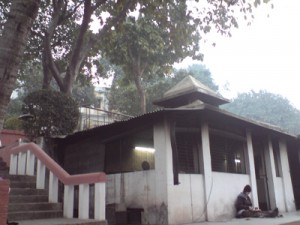
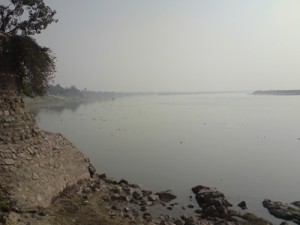

![Temple of Void [Sri Anandamayi Ma Ashram (Omkareshwar)]](http://www.tattwavisionyoga.com/wp-content/uploads/blog-temple-of-the-void-300x225.jpg) The Spiritual Ego
The Spiritual Ego![Deity of Emptiness [Sri Anandamayi Ma Ashram (Omkareshwar)]](http://www.tattwavisionyoga.com/wp-content/uploads/blog-deity-of-emptiness-225x300.jpg) As one talks of “inner” experiences, giving advice on what to do / what not to do; even distances oneself from others; is there really any reduction in the ego or in fact is it not escalating with its over elaborate claims & statements? Giving advice can be perceived as a form of massaging the “ego” therefore best left alone…or is it?
As one talks of “inner” experiences, giving advice on what to do / what not to do; even distances oneself from others; is there really any reduction in the ego or in fact is it not escalating with its over elaborate claims & statements? Giving advice can be perceived as a form of massaging the “ego” therefore best left alone…or is it?![Emptiness in God [Sri Anandamayi Ma Ashram (Omkareshwar)]](http://www.tattwavisionyoga.com/wp-content/uploads/blog-emptiness-alone-225x300.jpg) Whilst giving advice, one could always ask themselves what their own intention is for administering advice in the first place…one must be careful as the spiritual “ego” can appear in full effect when we are least expecting it. Periodically it can sneak up like creeping Jesus in fact!
Whilst giving advice, one could always ask themselves what their own intention is for administering advice in the first place…one must be careful as the spiritual “ego” can appear in full effect when we are least expecting it. Periodically it can sneak up like creeping Jesus in fact!![Ego Exit [Sri Anandamayi Ma Ashram (Omkareshwar)]](http://www.tattwavisionyoga.com/wp-content/uploads/blog-ego-exit-225x300.jpg) This process of self-reflection can be taken as a sadhana as we tread carefully along the journey. Swadhyaya is encouraged to understand the Self (inner / larger); however before tackling such a momentous task, perhaps it is easier to understand the ego-self? (outer / smaller). If continuously reflecting on our actions, eventually we begin to monitor our habits & then reform them (SWAN).
This process of self-reflection can be taken as a sadhana as we tread carefully along the journey. Swadhyaya is encouraged to understand the Self (inner / larger); however before tackling such a momentous task, perhaps it is easier to understand the ego-self? (outer / smaller). If continuously reflecting on our actions, eventually we begin to monitor our habits & then reform them (SWAN).